The University of Tuzla is a public university founded in 1976, with 12 faculties, an Academy of Dramatic Arts and 123 study programmes in north-eastern Bosnia and Herzegovina.
Overview
The key facts about this university at a glance.
Tuition
on request
Degrees
Doctor of Medicine, Master of Pharmacy, Bachelor, Master, PhD
Language
English (Master of Health Studies, PhD Biomedicine and Health, English studies) and Bosnian
Programmes
Master of Health Studies (English), PhD Biomedicine and Health (English), English Language and Literature, Medicine, Health Studies, Pharmacy, Engineering, Economics, Law, Natural Sciences, Humanities, Education, Sport, Dramatic Arts
Duration
6 years (Medicine), 5 years (Pharmacy), 4 years (Bachelor), 1 to 2 years (Master), 3 years (PhD)
Intake
October
Living costs
approx. €400 to 600 per month
Admission
Via Study in Bosnia as authorised partner, fixed quota of places per programme and year
About the university
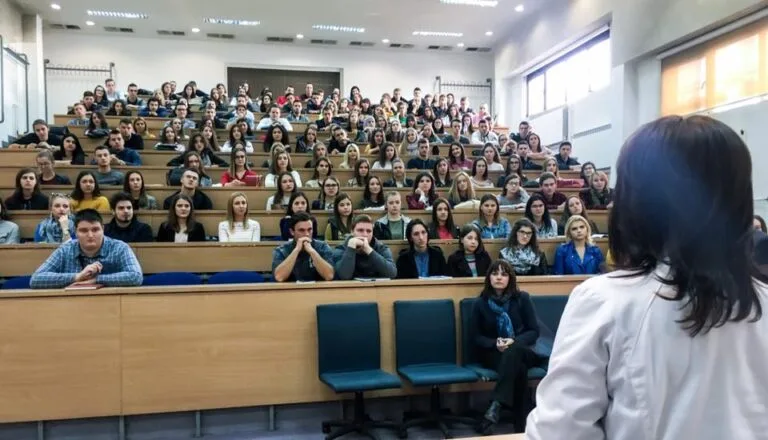
The University of Tuzla (Univerzitet u Tuzli, UNTZ) is the public university of Tuzla Canton in north-eastern Bosnia and Herzegovina. It was formally established on 18 November 1976 and celebrates its 50th anniversary in 2026. Today it teaches around 10,000 students at 12 faculties and the Academy of Dramatic Arts, in 123 study programmes at bachelor, master and doctoral level. For international students the English-taught offer sits mainly at the Faculty of Medicine: the one-year Master of Health Studies and the three-year doctoral programme Biomedicine and Health are both delivered in Bosnian or English. The Faculty of Philosophy teaches English Language and Literature, with four English-language master tracks.
The roots go back further than 1976. Tuzla opened its first higher school, a mining and technical college, in 1958 with 158 students, and the Faculty of Technology (1959) and the Faculty of Mining (1960) followed. The Faculty of Medicine and the Faculty of Economics were founded together with the university in 1976. Pharmacy and Law arrived in 2004. The university is state-accredited in Bosnia and Herzegovina and works as one legal entity, so all faculties share one rectorate, one student centre and one enrolment call.
Medicine is the best-known faculty. Since 1976 it has graduated 3,725 doctors of medicine and seen 405 doctoral theses defended. Clinical teaching takes place at the University Clinical Centre Tuzla (UKC Tuzla), one of the largest hospitals in the country. The six-year integrated Medicine programme (360 ECTS) is taught in Bosnian.
We are the Study in Bosnia team, with a head office in Bern and a local office in Bosnia and Herzegovina. We help you choose the right programme in Tuzla, prepare your documents and nostrification, find a room and arrange your student visa and residence permit.
At a glance
Study programmes
Master of Health Studies (second cycle, Faculty of Medicine). This one-year master (60 ECTS) is offered in Bosnian or English and leads to the title Master of Health Studies. It builds on a four-year bachelor in a health discipline and has four study directions: nursing, physiotherapy, medical laboratory diagnostics and radiological technology. Shared courses cover bioethics, selected chapters of human structure and function, and organisation and management in healthcare. Each direction then adds evidence-based practice, special methods and quality management in its own field. The programme suits nurses, physiotherapists and laboratory or radiology staff who want a research-based degree and leadership skills.
PhD Biomedicine and Health (third cycle, Faculty of Medicine). The three-year doctoral programme is taught in Bosnian or English and awards the title Doctor of Medical Sciences. The first year covers basic research in biomedicine, diagnostic methods, research methodology, public health, clinical research in surgical and internal medicine disciplines, clinical oncology and evidence-based medicine. The later years are devoted to the dissertation, usually supervised in departments working closely with UKC Tuzla. Applicants need an integrated Medicine degree or a master in medical sciences.
English Language and Literature (Faculty of Philosophy). The four-year bachelor in English Language and Literature is taught in English by the English department. It combines linguistics, British and American literature, translation and teaching methodology. In the second cycle the department runs English Studies (Anglistika), Linguistics of the English Language, Methodology of Teaching English and English Translation, all taught in English.
Master: Health Studies (also in English). Doctorate: Biomedicine and Health (also in English).
Doctorate: Pharmaceutical Sciences.
Master: Electrical Engineering and Computing, Technical Education and Informatics. Doctorate: Electrical Engineering and Computing.
Master: Energy and Thermo-Fluid Engineering, Production Engineering, Mechatronics, Sustainable Energy and Environment, Thermal Power Engineering. Doctorate: Mechanical Engineering with six specialisations, among them Mechatronics, Industrial Engineering and Machine Design.
Master: Mining, Geology, Civil Engineering (including Structures), Borehole Exploitation of Mineral Resources, Safety and Rescue, Disaster Risk Management and Fire Engineering. Doctorate: Mining, Geology, Civil Engineering (Structures, Hydrotechnics).
Master: the same five fields, with Food Quality and Safety Management and Nutrition as tracks of Food Technology. Doctorate: Technology, Agronomy, and Applied Chemistry jointly with the Faculty of Natural Sciences and Mathematics.
Master: Biology, Chemistry, Geography, Tourism Studies, Applied Mathematics, Applied Physics, Applied Biology, Applied Chemistry, Water Eco-monitoring and Bioindication, and teacher-education tracks in mathematics, physics, biology, chemistry and geography. Doctorate: Biology, Physics, Chemistry, Geography.
Master: Economics, Business Economics, Tourism Management. Doctorate: Economics and Business.
Master and doctorate in law.
Master: more than 25 programmes, among them Bosnian-Herzegovinian Literature, Philosophy, Sociology, German Language, Literature and Translation, Turkish Linguistics, History of Bosnia and Herzegovina, Psychology, Pedagogy, Political Science, Social Work and Journalism. Doctorate: History, Literature, Linguistics, Communication Studies, Pedagogy, Psychology, Social Work.
Master: Audiology, Speech Therapy, Behavioural Disorders, Special Education and Rehabilitation. Doctorate: Special Education and Rehabilitation.
Master: Physical Education and Sport, Sports Coach (two years). Doctorate: Kinesiology.
Master: Acting, Production.
Faculties and campus

The Faculty of Medicine was founded in 1976 together with the university. The first doctoral programme started in 1983, the partnership with UKC Tuzla was formalised in 1992, the Research Centre for Biomedical Sciences opened in 2010 and a clinical simulation centre in 2020. The faculty sits at Univerzitetska 1, sharing the street with several other faculties, and has its own lecture halls, laboratories, medical library and simulation rooms.
Teaching is organised in 35 departments, from Anatomy and Neuroanatomy, Physiology and Histology to Internal Medicine, Surgery, Paediatrics, Gynaecology and Obstetrics, Oncology and Family Medicine. Most clinical teaching happens at the University Clinical Centre Tuzla. Students also train at the Public Health Institute of Tuzla Canton and at the Tuzla Health Centre for family medicine and prevention.

Founded in 2004, the Faculty of Pharmacy shares a building complex with the Faculty of Economics and the Faculty of Technology. Its core is the integrated Pharmacy programme, which trains master pharmacists for community and hospital pharmacies, industry and laboratories. Since 2025/26 the faculty also runs a bachelor in Cosmetology. Doctoral candidates work on pharmaceutical sciences in the faculty's chemistry, pharmacognosy and technology laboratories.

Electrical engineering has been taught in Tuzla since 1976; mechanical engineering split off as a separate faculty in 1999. The faculty is close to the old town and trains engineers in five tracks of Electrical Engineering and Computing: automation and robotics, power networks, energy conversion, computer science and telecommunications. A second programme, Technical Education and Informatics, prepares teachers. Graduates find work in the power plants and industry of the Tuzla region and in software companies.

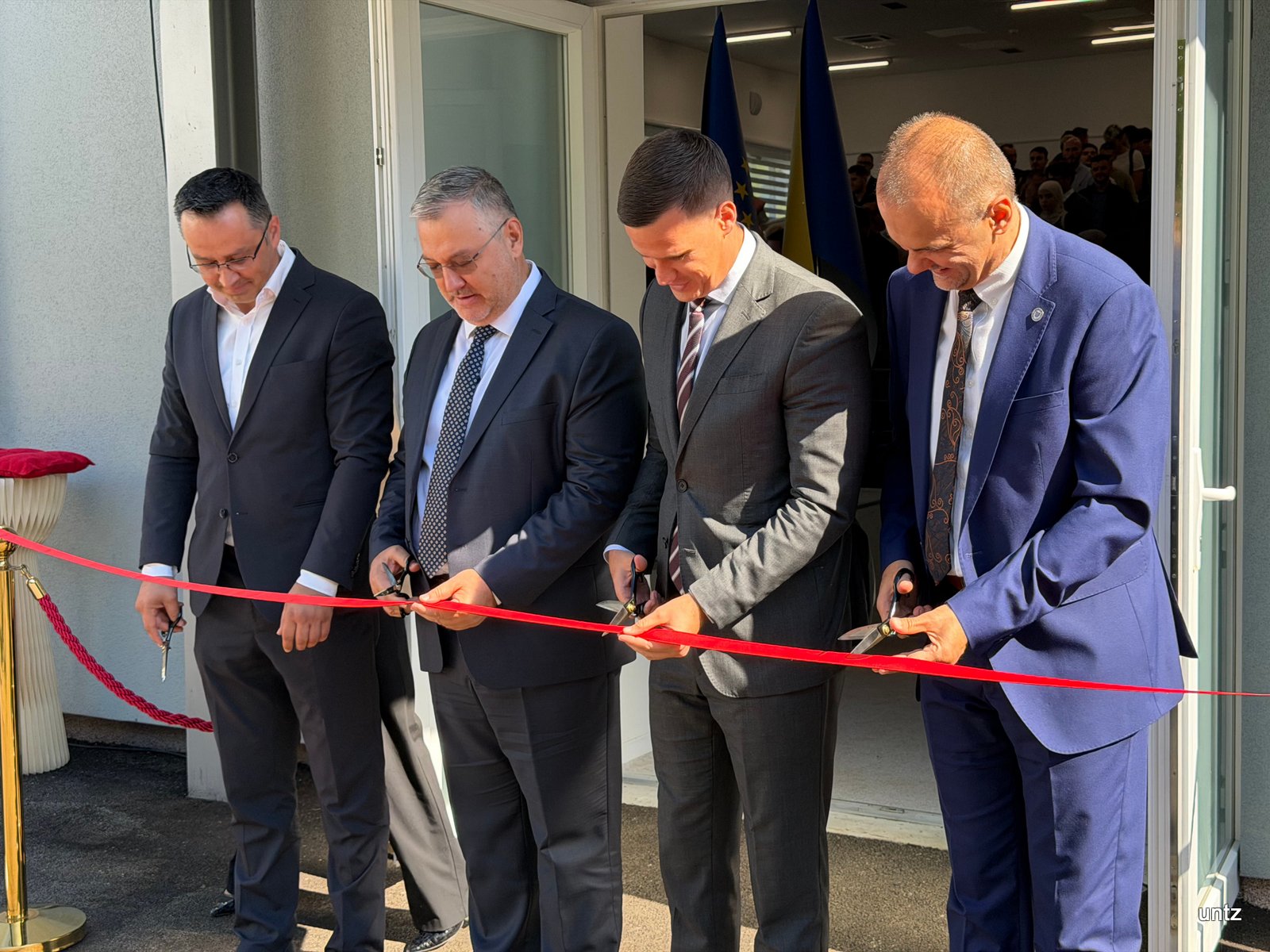
Independent since 1999, the faculty offers Energy and Thermo-Fluid Engineering, Mechatronics and Production Engineering. In September 2026 it opened a renovated laboratory complex with a new Energy Transition Centre. More than 1.5 million KM from the European Union and Tuzla Canton went into the building and its equipment. The labs serve teaching, research and joint projects with manufacturing companies on energy efficiency.

This is the oldest branch of higher education in Tuzla. It grew out of the mining and technical college of 1958 and became a faculty in 1960. The region's coal and salt deposits shaped its profile. Today it teaches Mining, Geology, Civil Engineering, Borehole Exploitation of Mineral Resources and Safety and Rescue, and runs a master in disaster risk management and fire engineering.

Founded in 1959 as the first faculty in Tuzla, the Faculty of Technology still reflects the city's chemical and salt industry. It teaches Chemical Engineering and Technology, Food Technology, Environmental Protection Engineering, Agronomy and Occupational Safety. The faculty publishes the journal Tehnologica Acta and hosts an annual agricultural conference.

Science groups started at the Faculty of Philosophy in 1993, and the faculty became independent in 2002. It covers Biology, Chemistry, Physics, Mathematics, Geography and Tourism Studies. The building houses five general physics laboratories, a research lab for radiation detection and dosimetry, four biology teaching labs, a microbiology and genetics lab and three computer centres. More than 100 teachers and assistants work here.

The Faculty of Economics was founded in 1976 in Brčko and moved to Tuzla in 1992. It offers Economics, Business Economics and Tourism Management, plus a doctorate in Economics and Business. Many graduates work in banking, accounting and the regional export industry.

Founded in 2004, the Faculty of Law teaches Law and Public Administration and runs master and doctoral studies in law. It is close to the city centre, next to the first student pavilion.

The Faculty of Philosophy, founded in 1993 in the tradition of the teacher training college of 1960, is the largest unit by number of programmes. Its 11 departments teach languages and literature (Bosnian, English, German, Turkish), History, Philosophy and Sociology, Pedagogy, Psychology, Political Science, Social Work, Journalism, Preschool Education and Primary School Teaching. The English department is the place to study entirely in English.

Founded in 1993 as the Faculty of Defectology and renamed in 2004, it trains speech therapists, audiologists, special educators and specialists for behavioural disorders. It shares the address of the Faculty of Medicine, which suits the clinical side of its programmes.

Established in 2002, the faculty teaches Physical Education and Sport and a Sports Coach programme, with a doctorate in kinesiology. Students train in the city's sports halls and on outdoor grounds.

Founded in 1998, the Academy trains actors and theatre and film producers. Small classes. Productions are shown in Tuzla's theatres and at festivals across the region.
Admission
Your application to the University of Tuzla goes through us. As an authorised partner of Bosnian universities, Study in Bosnia has contracts with the individual universities and a fixed quota of places per programme and year. We allocate these places on a first-come, first-served basis, provided you meet certain minimum criteria and the visa and entry requirements.
We handle the entire admission for you, whether you want a bachelor or integrated programme such as Medicine or Pharmacy, the English-taught Master of Health Studies or the doctorate in Biomedicine and Health. We check your eligibility and tell you which programme fits your background. Then we organise certified translations and the nostrification of your school certificate or degree, prepare your documents and submit your complete application to the faculty as its authorised partner. We stay in contact with the student services office until your place is confirmed.
After admission our local office in Bosnia and Herzegovina supports you with the student visa, the residence permit in Tuzla and your first room in the city.
Tuition and living costs
The University of Tuzla sets separate fees for international students, approved each year by the Government of Tuzla Canton. The 2026/27 amounts are confirmed on request; we obtain the current figure for your programme before you apply.
Some nationalities study under bilateral agreements on special terms. We check this for your passport.
Plan for apostilles, court-certified translations and the nostrification fee before you leave home. In Tuzla you pay a small enrolment and administration fee, a medical check for the residence permit and the residence permit fee itself. Health insurance for the first year is also needed.
Tuzla is cheaper than Sarajevo. A coffee costs about €1, a lunch menu €5 to 7.
Our estimate for the one-year English-taught Master of Health Studies: tuition about €1,850 plus living costs of €400 to 600 × 12 months (€4,800 to 7,200) gives roughly €6,650 to 9,050 for the full programme. For the three-year doctorate the living costs alone come to €14,400 to 21,600, plus tuition on request. These are our own planning figures, not official prices.
City and student life
Tuzla is the third-largest city in Bosnia and Herzegovina and the centre of a canton of about 440,000 people. Its name comes from the Turkish word for salt, and salt still defines the city. Right in the centre lie the Pannonian Lakes, salt-water lakes created on former salt-mining ground. In summer they turn into a city beach with sand, lawns and cafés. Locals call it the sea of Tuzla.
The old town is compact. Kapija square, Freedom Square (Trg slobode) with its salt fountain and the pedestrian streets of Korzo are lined with cafés, bakeries and bookshops. Most faculties sit along Univerzitetska and Urfeta Vejzagića streets, within walking distance of the old town and the Pannonian Lakes. The Faculty of Electrical Engineering is close to the Franciscan monastery, the Faculty of Law next to the first student pavilion. UKC Tuzla is on the hill at Gradina and Trnovac, a short bus or taxi ride from the faculties.
We usually advise students to look for rooms in the central districts such as Slatina, Kreka and the streets around Univerzitetska. From there you walk to lectures, and buses reach UKC Tuzla quickly. Flats are often furnished. We view them before you sign.
Getting around is easy. City buses and inexpensive taxis cover the whole city. Tuzla International Airport at Dubrave is about 15 km away and has low-cost flights to Germany, Austria, Switzerland, Sweden and other countries. By road, Sarajevo is about 2.5 hours away, Belgrade about 3.5 hours and Zagreb about 4.5 hours. The Adriatic coast is a long day trip or a weekend away.
The climate is continental. Summers are warm and sunny, winters cold with some snow. Food is affordable. Bread costs under €1, a plate of ćevapi €4 to 5, and fresh fruit from the market is cheap in season.
Tuzla is a calm and safe city with a large student population. There is plenty to do. Ilinčica hill offers walking trails above the town, Modrac Lake is a short drive away for swimming and cycling, and Konjuh mountain has forests and waterfalls for weekend hikes. The city has a national theatre, the Academy's student productions, concerts and an active football and basketball scene. In 2026 the university celebrates 50 years with events through the academic year.
Compared with the University of Sarajevo, the University of Tuzla offers a similar public-university structure in a smaller city with shorter distances and lower rents. Many of our students value that balance.
How we support you
One team for everything, with our head office in Bern and our local office in Bosnia and Herzegovina.
We look at your school certificate, your goals and your budget and tell you which programme fits you best.
Translations, nostrification of your certificate and the complete application, submitted on time.
We prepare your visa file and accompany you to the authorities for your residence permit.
A flat or a room in a shared flat, and our local team is there when you arrive.
FAQ
Yes. The University of Tuzla teaches the one-year Master of Health Studies and the three-year doctoral programme Biomedicine and Health in Bosnian or English at its Faculty of Medicine. The Faculty of Philosophy teaches English Language and Literature and four master tracks in English. Study in Bosnia helps you choose the programme, prepares your documents and submits your application.
The six-year integrated Medicine programme at the University of Tuzla (360 ECTS, Doctor of Medicine) is taught in Bosnian. Clinical training takes place at the University Clinical Centre Tuzla. If you plan to study Medicine in Bosnian, a good language level before the start is needed. We help you plan the preparation and the application.
Fees for international students at the University of Tuzla are set each year by the Government of Tuzla Canton and confirmed on request for 2026/27. The last published fee for Medicine was about €1,525 per year. Living costs in Tuzla are approx. €400 to 600 per month. We obtain the current fee for your programme before you apply.
Yes. The University of Tuzla is a public university founded in 1976 by Tuzla Canton. It is state-accredited in Bosnia and Herzegovina and has 12 faculties, the Academy of Dramatic Arts and 123 study programmes. In 2026 it celebrates its 50th anniversary.
The rectorate of the University of Tuzla is at Dr. Tihomila Markovića 1 in Tuzla. Most faculties, including Medicine, Pharmacy, Technology, Economics and Natural Sciences, are on Univerzitetska and Urfeta Vejzagića streets, within walking distance of the old town and the Pannonian salt lakes. A new university campus is under construction.
Students of the Faculty of Medicine of the University of Tuzla train mainly at the University Clinical Centre Tuzla (UKC Tuzla), one of the largest hospitals in Bosnia and Herzegovina. Further teaching bases are the Public Health Institute of Tuzla Canton and the Tuzla Health Centre for family medicine.
Study in Bosnia is an authorised partner of Bosnian universities, with contracts and a fixed quota of places per programme and year. We give these places out on a first-come, first-served basis, provided you meet certain minimum criteria and the visa and entry requirements. We handle the documents, translations and nostrification, submit your complete application and take care of the visa, the residence permit and housing.
The Student Centre of the University of Tuzla runs dormitory pavilions with about 500 places and a student restaurant. Many international students prefer a room in a shared flat in the centre of Tuzla, which costs approx. €150 to 250 per month. Our local office helps you find and check a room before you arrive.
Tuzla International Airport at Dubrave, about 15 km from the city, has low-cost flights to many European cities. By road, Tuzla is about 2.5 hours from Sarajevo, 3.5 hours from Belgrade and 4.5 hours from Zagreb. Buses connect Tuzla with all major cities in the region.
Study in Bosnia
Study in Bosnia is the official representative of Bosnian universities. We help you from your study place to housing, visa and residence permit.
30 minutes, free and without obligation.