Public university on the Neretva with ten faculties and an English-taught six-year medicine programme next to the University Clinical Hospital Mostar.
Overview
The key facts about this university at a glance.
Tuition
€9,000 / year, paid annually (Medicine in English), other programmes on request
Degrees
Doctor of Medicine, Doctor of Dental Medicine, Master of Pharmacy, Bachelor, Master, PhD
Language
English (Medicine) and Croatian
Programmes
Medicine (English), Civil Engineering PhD (English), Medicine, Dental Medicine, Pharmacy, Health Studies, Engineering and Computing, Architecture, Economics, Law, Humanities, Natural Sciences and Education, Agriculture, Fine Arts
Duration
6 years (Medicine, Dental Medicine), 3 to 4 years (Bachelor), 1 to 2 years (Master), 3 years (PhD)
Intake
October
Living costs
approx. €500 to 700 per month
Admission
Via Study in Bosnia as authorised partner, fixed quota of places per programme and year
About the university
The University of Mostar (Sveučilište u Mostaru) is a public, state-accredited university in Mostar, Bosnia and Herzegovina, founded on 11 February 1977 and teaching mainly in Croatian. It has ten faculties and the Academy of Fine Arts, around 9,000 students and more than 1,000 teachers. For international applicants, the flagship is Medical Studies in English at the School of Medicine: a six-year integrated programme of 360 ECTS leading to the title Doctor of Medicine, with an annual tuition fee of €9,000 and 30 places per year.
Clinical teaching takes place at the University Clinical Hospital Mostar (SKB Mostar), the largest hospital in Herzegovina, which sits on the same site at Bijeli Brijeg as the School of Medicine. Students also train at Health Centre Mostar and at the public health institutes of the Herzegovina-Neretva Canton and the Federation of Bosnia and Herzegovina. The School of Medicine itself was established on 22 April 1997 and also runs Medicine and Dental Medicine in Croatian.
Most faculties share the main campus on Matice hrvatske street in the west of the city, while the School of Medicine and the Faculty of Health Studies are at the hospital complex and the Academy of Fine Arts is in Široki Brijeg, about 20 km away. The university offers around 150 study programmes at bachelor, master, integrated and doctoral level, including medicine, pharmacy, health sciences, engineering, computing, economics, law, humanities, natural sciences, education, agriculture and the fine arts. At doctoral level the Faculty of Civil Engineering, Architecture and Geodesy also teaches its civil engineering programme in English.
Mostar is a compact city of about 106,000 people on the Neretva river, two hours from Sarajevo and a short drive from the Adriatic coast. Our team at Study in Bosnia supports you from the first document to the first lecture: securing the study place, preparing translations and nostrification, finding a room, and handling the student visa and residence permit through our local office in Bosnia and Herzegovina.
At a glance
Study programmes
Medical Studies in English is an integrated undergraduate and graduate programme of six years, or twelve semesters, worth 360 ECTS. Graduates receive the title Doctor of Medicine. The academic year runs from early October to early July. Years one to three cover the basic medical sciences: anatomy, medical biology, medical chemistry, physics and biophysics, histology and embryology, biochemistry, physiology, immunology, genetics, pathology, pharmacology, pathophysiology and microbiology. Years four to six are clinical, with internal medicine, neurology, psychiatry, radiology, surgery, gynaecology and obstetrics, paediatrics, ophthalmology, ENT, oncology, emergency medicine, family medicine and forensic medicine.
Two details stand out. The final year contains structured clinical rotations in internal medicine, surgery, gynaecology and paediatrics at the University Clinical Hospital Mostar. Summer practice in internal medicine and surgery can also be completed outside the school's own teaching bases. Elective courses with titles such as "Test-tube baby" or "Understanding clinical trials" give the curriculum a personal touch, and Croatian Language I and II help you talk to patients from the first clinical year. The intake is 30 students per year, so groups are small.
The three-year postgraduate doctoral study in civil engineering (180 ECTS) was launched in 2019/20 and is offered in Croatian and English. It suits engineers with a master's degree who want to research structures, hydraulic engineering, geotechnics or construction management.
Doctoral study: Biomedicine and Health (Biomedicina i zdravstvo).
Master's studies (2 years, 120 ECTS): Clinical Nursing Care, Clinical Physiotherapy, Radiological Technology, Sanitary Engineering and Midwifery. Doctoral study: Health Sciences (3 years, 180 ECTS).
Master's study: Laboratory Biomedicine. The faculty also runs doctoral studies.
All three fields continue at master's level, and the faculty offers postgraduate doctoral study. Specialisations in mechanical engineering include design of structures, production engineering, industrial engineering and management, and mechatronics.
Master's study in Civil Engineering (2 years, 120 ECTS) with General, Structures, and Hydraulic and Environmental Engineering tracks; master's options in architecture and in geodesy; doctoral study in Civil Engineering.
Master's studies of one year (60 ECTS) or two years (120 ECTS) in the same five areas; a one-year specialist study in Financial and Accounting Forensics; doctoral study in Economics and Business Economics, also run jointly with the Faculty of Economics of the University of Split. Teaching also takes place in Vitez and Orašje.
Master's studies in Law (1 year, 60 ECTS) and in Criminalistics and Security Management (2 years, 120 ECTS); a specialist study in Insurance Law; doctoral study in legal sciences (3 years, 180 ECTS) with criminal, legal-historical, constitutional, international, civil, and labour and administrative law tracks.
Most subjects continue at master's level. Specialist studies: Management and Leadership of Educational Institutions; EU Project Management. Doctoral study: interdisciplinary doctoral programme.
Many science subjects can be studied as single or two-subject degrees. Master's studies cover all these fields, including Data Science and Engineering, Sustainable Tourism Development, Analytical Chemistry and Biochemistry, Ecology and Nature Conservation, Inclusive Education, and six kinesiology tracks from strength and conditioning to kinesitherapy. Doctoral studies: Educational Sciences (Pedagogy), Geographical Foundations of Environmental Planning, and Ecology, Nature and Environmental Protection. Selected programmes are also taught in Orašje.
Master's studies (2 years, 120 ECTS): Plant Sciences, Animal Sciences, Phytomedicine, Agroeconomics, Viticulture and Oenology, Food Engineering, and Nutrition. Doctoral study: Agriculture and Environmental Protection (3 years, 180 ECTS).
Master's studies (2 years): Fine Arts (Painting, Sculpture, Printmaking), Screenwriting, Directing and Editing, and Graphic Design. Doctoral study: Ars Sacra, a three-year doctorate in painting.
Faculties and campus

The School of Medicine was established on 22 April 1997 and stands next to the University Clinical Hospital Mostar at Bijeli Brijeg, in the north-west of the city. Its building holds an amphitheatre, lecture and computer rooms, a dissection hall for anatomy, and teaching laboratories for biology, histology, physiology, biochemistry, pharmacology and microbiology. Research labs work in molecular biology, immunology, cytogenetics, physiology and morphology.
The school runs a Centre for Cytogenetics that also performs chromosome analysis for hospital patients, a Centre for Sleep Medicine and a Centre for Continuing Medical Education. Each year it admits 60 students to Medicine in Croatian, 30 to Dental Medicine and 30 to Medical Studies in English. The hospital has 17 clinics, from internal medicine with a dialysis centre to neurosurgery, oncology and paediatrics, plus a clinical skills lab used in teaching.
Lectures and hospital wards are a few minutes apart. That saves time.
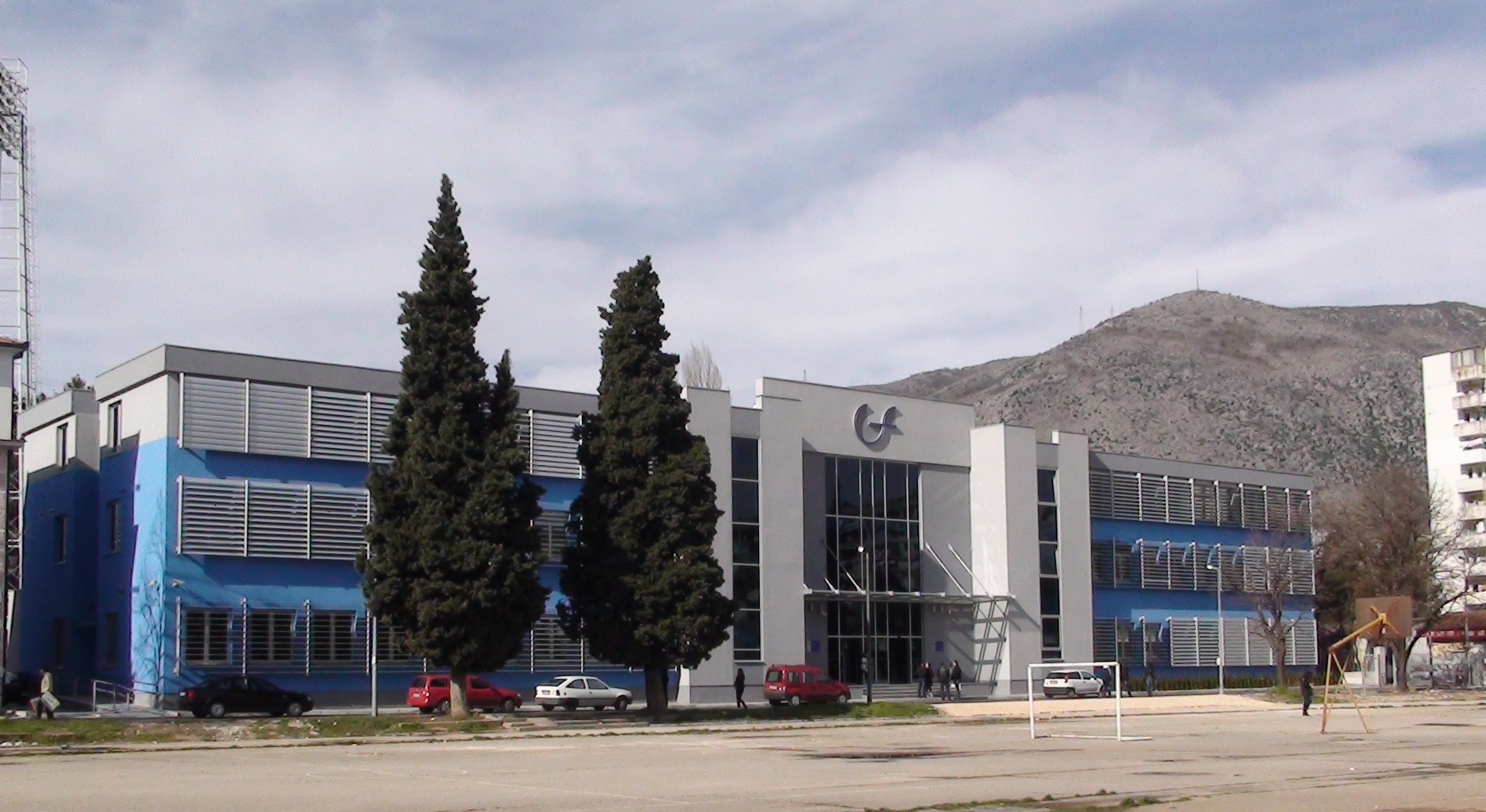
The Faculty of Health Studies began in 2000 as the College of Health and became a faculty in 2008. Since 2009 it has used a new building at Zrinskog Frankopana 34, inside the grounds of the University Clinical Hospital and close to the School of Medicine; the building was financed by the Government of the Republic of Croatia. It trains nurses, midwives, physiotherapists, radiological technologists and sanitary engineers at bachelor and master level, and has offered a doctorate in Health Sciences since 2015/16.
The Faculty of Pharmacy sits on the main campus at Matice hrvatske 13. Its core programme is the integrated study of Pharmacy, joined by bachelor's degrees in Cosmetology and Laboratory Biomedicine and a master's in Laboratory Biomedicine. The faculty organises the annual Mostar Pharmaceutical Days and has an active student section, which gives you early contact with the profession.
FSRE is the oldest engineering school in the city. It goes back to 1959, when the Higher Technical School of Mechanical Engineering admitted its first 46 students. It became a full faculty in 1976, added computing in 2002/03 and later electrical engineering. Students work on Formula Student cars, 3D printing, robotics and drones in the faculty's labs and workshops, and the faculty cooperates closely with the engineering faculties in Zagreb and Split. Local companies offer scholarships to first-year students.

Teaching started on 1 September 1978 with 160 students. In November 2008 the faculty moved into a new building on the Matice hrvatske campus, and in 2021 it took its present name to reflect its three fields. Architecture and Urbanism was added in 2017/18, Geodesy and Geoinformatics in 2019/20, together with the doctoral study offered in Croatian and English.
The Faculty of Economics began in 1971 as a department of the Sarajevo faculty and has been independent since 1976. It teaches business economics with five majors, runs a professional study with a tourism track, and has centres for lifelong learning and for entrepreneurship and projects, as well as an employers' club. The faculty regularly hosts Erasmus+ students from Spain and France, who take courses taught in English during their exchange semester.

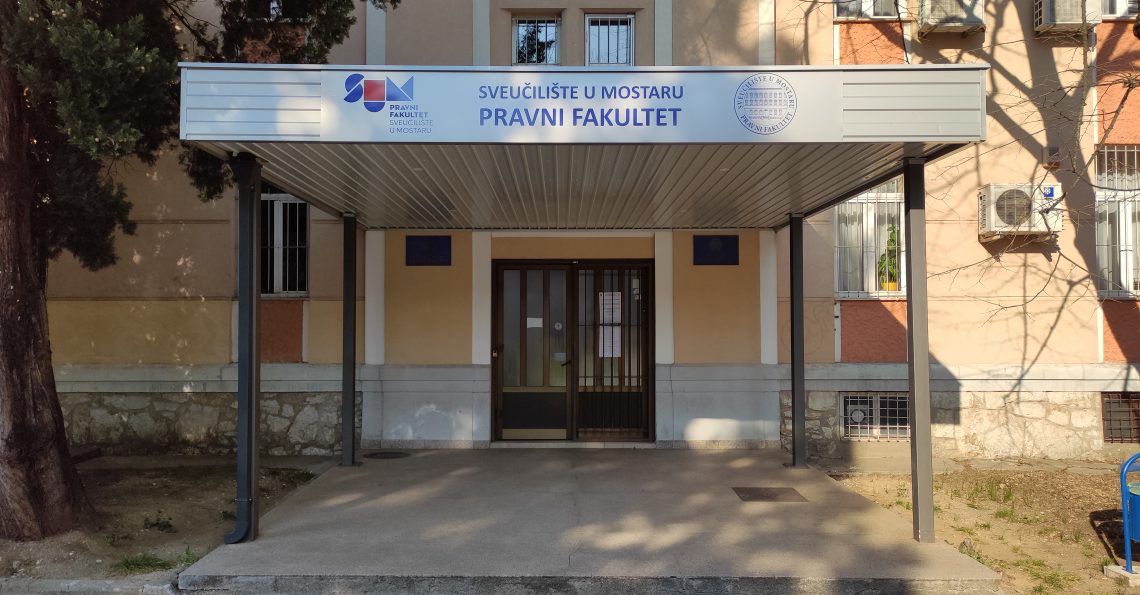
Like economics, law began in 1971 as a Sarajevo department and has stood on its own since 15 November 1976. Students practise trials in a simulation courtroom and use a criminalistics laboratory, which supports the bachelor's and master's study of Criminalistics and Security Management introduced in 2016/17.
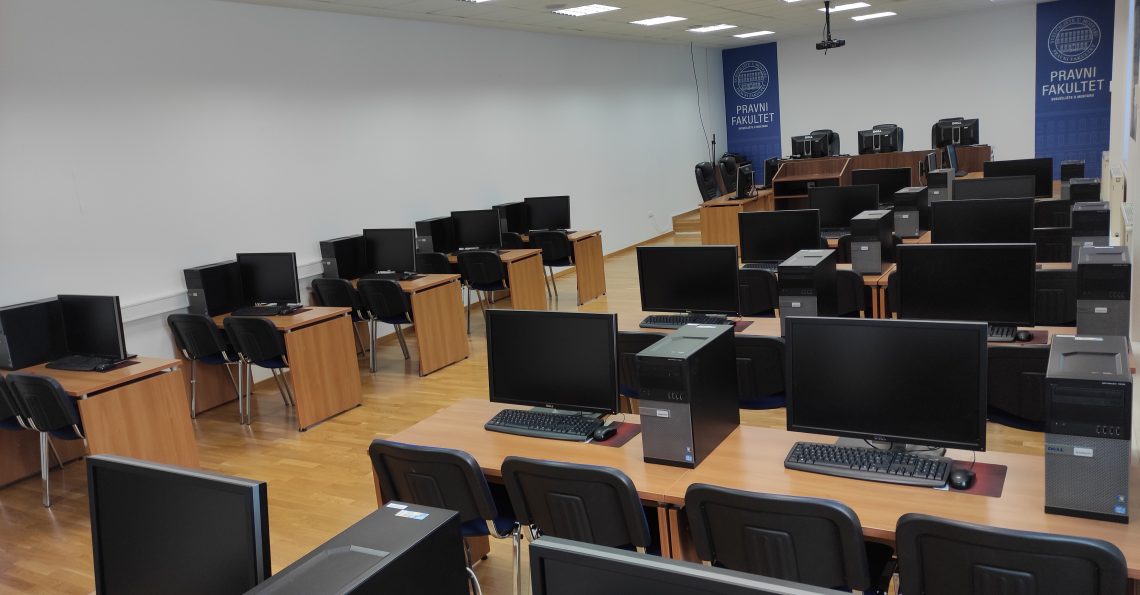
The faculty grew out of the former Teacher Training College, which was split in 2005; it received its current name on 21 March 2007. It works in a building of around 5,000 m² with three auditoriums and ten classrooms. Seventeen departments cover languages, history, philosophy, psychology, journalism, social work, political science and speech therapy, and the faculty partners with institutions such as the British Council and the Goethe-Institut.
FPMOZ was created in 2005 from the same Teacher Training College, whose roots go back to 1950. It is the broadest faculty of the university, teaching biology, chemistry, physics, mathematics, computer science, geography, kinesiology, music and teacher education. Programmes in computer science, preschool and primary education and kinesiology are also delivered in Orašje.
The faculty builds on the Higher Agricultural School of 1960 and today has its seat at Biskupa Čule bb, with an experimental field in the suburb of Rodoč. Herzegovina is wine, olive and fruit country, and the curriculum follows that: viticulture and oenology, olive growing and oil production, protected vegetable growing, food chemistry and nutrition. Field trips lead to dairies, food plants and the Neretva fish farms, and a Real-Time PCR device supports research.

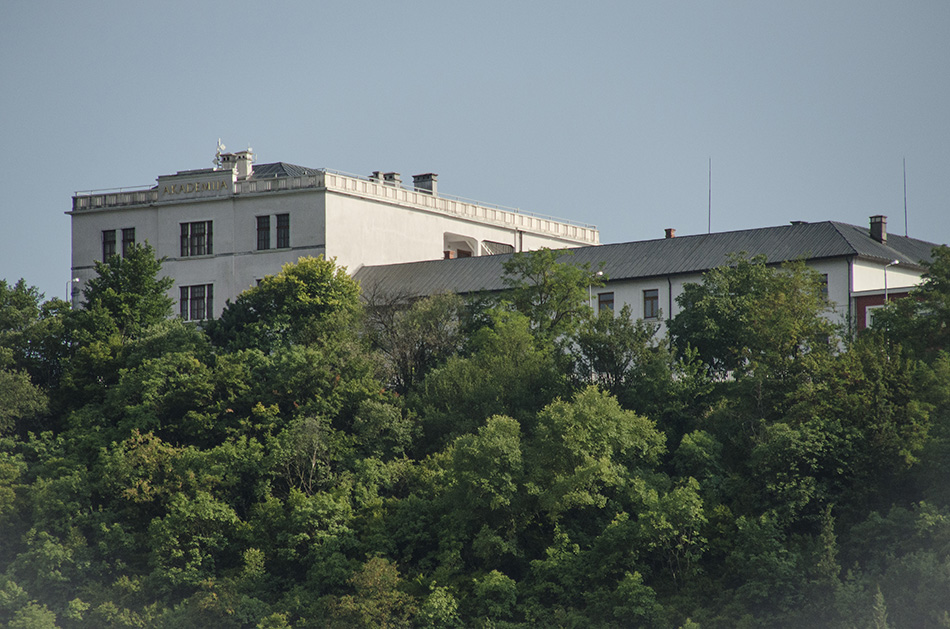
The University Council founded the Academy on 11 January 1996 in Široki Brijeg, a town about 20 km west of Mostar, drawing on the Franciscan Gallery and its art circle. Painting and printmaking use the main building, while sculpture moved into a new building in the same complex in 2009/10. A ground-floor gallery and multimedia hall host exhibitions and talks, and workshops for glass and metal round off the studios.
Admission
Your application to the University of Mostar goes through us. As an authorised partner of Bosnian universities, Study in Bosnia has contracts with the individual universities and a fixed quota of places per programme and year. We allocate these places on a first-come, first-served basis, provided you meet certain minimum criteria and the visa and entry requirements.
We handle the entire admission for you, for Medical Studies in English as well as for the programmes taught in Croatian. Study in Bosnia first checks whether your school-leaving certificate and subjects fit the programme. We then arrange certified translations into Croatian and the nostrification of your certificate, prepare your documents and submit your complete application to the faculty as its authorised partner. Our local office stays in contact with the student services office until you are enrolled.
After admission we apply for your student visa and residence permit with you, register your address and help you find a room near Bijeli Brijeg. If you choose a programme taught in Croatian, we also advise you on language preparation before the start.
Tuition and living costs
Tuition at the University of Mostar is set in convertible marks and is non-refundable once paid. Because the mark is pegged to the euro, the euro amount stays stable. On top of tuition, plan for a few one-off costs: certified translations, nostrification of your school certificate, the student visa and residence permit, health insurance, a deposit for your room, and textbooks and a white coat in the first year.
Most of our students in Mostar spend between €500 and 700 a month. The University Student Centre offers rooms in two pavilions, which can bring housing costs down further.
Our estimate: tuition of €9,000 × 6 years = €54,000, plus living costs of about €600 × 12 months × 6 years = €43,200, gives a total of roughly €97,200 for the complete Doctor of Medicine programme in English. Add a few hundred euros for documents, visa and residence permit at the start. This is our own calculation, not an official university figure. Students who share a flat or live in the Student Centre usually stay below this total.
A quick comparison helps. At the Faculty of Medicine of the University of East Sarajevo in Foča, English-taught medicine costs less per year and life follows a small-town rhythm, while Mostar combines a larger city, a big teaching hospital on site and the coast within reach. Both are good choices, and we help you weigh them.
City and student life
Mostar is one of the most beautiful student cities in the Balkans. The Old Bridge (Stari most) over the green Neretva has been a UNESCO World Heritage Site since 2005, and the old bazaar of Kujundžiluk is lined with workshops, cafés and small restaurants. Around 106,000 people live here, so the city is big enough for everything you need and small enough to cross on foot.
The main campus at Matice hrvatske lies in the western part of the city, about a 25-minute walk from the Old Bridge. The School of Medicine and the Faculty of Health Studies are at Bijeli Brijeg next to the University Clinical Hospital, roughly 2.5 km from the old town. Popular areas for students are Bijeli Brijeg, Centar and the streets around the Rondo roundabout, because both the campus and the hospital can be reached on foot or by a short bus ride. We usually advise medical students to look for rooms in Bijeli Brijeg, since lectures, labs and hospital wards are then a few minutes from home.
Getting around is easy. The city's yellow buses connect the districts, and taxis are cheap by Western European standards. Mostar Airport is 10 km from the centre. Sarajevo is 130 km away, about two hours by car or by train on the scenic Sarajevo to Ploče line through the Neretva canyon. Dubrovnik (145 km), Split (170 km) and the beaches of Neum and Makarska are close enough for weekend trips. Zagreb and Belgrade are each roughly six to seven hours away by road or coach.
The climate is Mediterranean. Summers are long, dry and very warm, often above 35 °C, while winters are mild and rainy, with snow rare in the city itself.
Daily life is affordable. A coffee costs around €1 to 1.50, a portion of ćevapi about €4 to 6, and a lunch menu in a local restaurant €6 to 10. Markets sell local figs, pomegranates, cherries and Herzegovinian wines such as Žilavka and Blatina. Mostar is a safe and friendly city where students walk home in the evening without second thoughts.
For leisure there is plenty. The Kravica waterfalls, the Blagaj dervish monastery at the source of the Buna and the medieval town of Počitelj are all within 30 to 40 minutes. You can raft, hike in the Velež and Prenj mountains or watch the famous bridge divers in summer. The university's Student Union organises the freshers' party, sports and cultural projects, and the Mostar Summer Fest and the Red Bull Cliff Diving event bring visitors from across Europe. Our local team helps you settle in during the first weeks, from opening a bank account to registering your address.
How we support you
One team for everything, with our head office in Bern and our local office in Bosnia and Herzegovina.
We look at your school certificate, your goals and your budget and tell you which programme fits you best.
Translations, nostrification of your certificate and the complete application, submitted on time.
We prepare your visa file and accompany you to the authorities for your residence permit.
A flat or a room in a shared flat, and our local team is there when you arrive.
FAQ
Yes. The School of Medicine of the University of Mostar offers Medical Studies in English, a six-year integrated programme of 360 ECTS that leads to the title Doctor of Medicine. About 30 places are planned per year for citizens of Bosnia and Herzegovina and foreign students. Clinical training takes place at the University Clinical Hospital Mostar, right next to the school.
The annual tuition fee for Medical Studies in English at the University of Mostar is €9,000. The application fee is 140 KM, about €72. Living costs in Mostar are around €500 to 700 per month. Our estimate for the full six-year programme, including tuition and living costs, is about €97,200.
Most faculties of the University of Mostar share the main campus at Matice hrvatske bb in the west of Mostar, about 25 minutes on foot from the Old Bridge. The School of Medicine and the Faculty of Health Studies are at Bijeli Brijeg beside the University Clinical Hospital. The Academy of Fine Arts is in Široki Brijeg, around 20 km away.
Yes. The University of Mostar is a public university founded in 1977 and state-accredited in Bosnia and Herzegovina. It has ten faculties and the Academy of Fine Arts, around 9,000 students and more than 1,000 teachers. It is the only public university in Bosnia and Herzegovina that teaches mainly in Croatian, and it is a member of several European university networks.
Medical students of the University of Mostar train mainly at the University Clinical Hospital Mostar (SKB Mostar), which has 17 clinics including internal medicine, surgery, neurosurgery, oncology, paediatrics and gynaecology. Further teaching bases are Health Centre Mostar and the public health institutes of the canton and of the Federation of Bosnia and Herzegovina.
Study in Bosnia is an authorised partner of Bosnian universities, with contracts and a fixed quota of places per programme and year. We give these places out on a first-come, first-served basis, provided you meet certain minimum criteria and the visa and entry requirements. We handle the documents, translations and nostrification, submit your complete application and take care of the visa, the residence permit and housing.
Not for Medical Studies in English. The University of Mostar teaches that programme fully in English, and Croatian Language I and II are part of the curriculum so you can communicate with patients later. All other bachelor's and master's programmes at the University of Mostar are taught in Croatian, so for those you need good Croatian.
Yes. The University Student Centre of the University of Mostar has two pavilions with 187 rooms and 420 beds, a gym, reading rooms and a laundry. Many international students also rent rooms in shared flats near Bijeli Brijeg or the city centre for about €150 to 250 a month. Our local office helps you find and check a suitable room.
Study in Bosnia checks your eligibility for the University of Mostar, organises translations and the nostrification of your school certificate, submits your complete application and stays in contact with the admissions office. After admission we arrange your student visa and residence permit and help you find housing through our local office in Bosnia and Herzegovina.
Study in Bosnia
Study in Bosnia is the official representative of Bosnian universities. We help you from your study place to housing, visa and residence permit.
30 minutes, free and without obligation.